When manufacturers consider investing in automation, the discussion usually revolves around a few straightforward questions:
- What is the initial investment?
- What is the expected return on investment (ROI)?
- Is it worth doing now?
However, there is another question-one that is rarely included in the financial spreadsheet, yet may be the most important of all:
What is the real cost of not automating?
This cost never appears as a single line item on an invoice or in a financial report. Instead, it quietly accumulates every day, every shift, and across every production line that continues to operate manually or semi-automatically- even though it could be performing far more efficiently.
In many cases, the true financial loss does not come from investing in automation, but from delaying it.
In this article, we’ll explore the hidden costs manufacturers often overlook and explain where investing in automation can significantly reduce long-term operational expenses.
Time Loss That Quickly Becomes Financial Loss
The first—and most obvious—cost is time.
Manual processes are inherently slower than automated ones. Whether it’s part loading, quality inspection, packaging, assembly, or internal logistics, every additional minute in the production process creates a bottleneck that slows the entire manufacturing operation.
In many facilities, the productivity gap between an automated line and a manual or semi-automated one can reach dozens of percentage points. More importantly, these lost minutes prevent equipment and production lines from operating at their full potential.
Manufacturers have already invested heavily in machinery, facilities, labor, and energy. Yet without automation, they often fail to maximize the return on those investments.
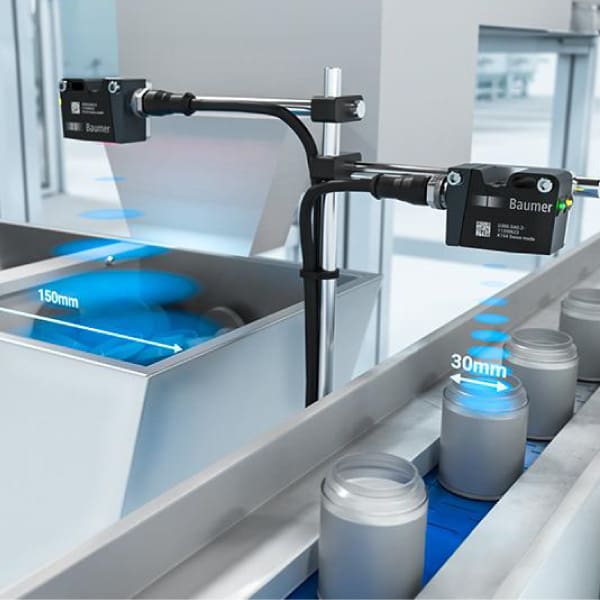
For example, a small metal parts manufacturer manually inspected, weighed, and packaged every component using two operators. After implementing a simple automated solution consisting of an automated feeding system, integrated weighing sensors, a smart conveyor, and a robotic arm, packaging time per part decreased by approximately 40%.
The result? The production line effectively gained almost an additional shift of output each week—without increasing staffing levels or working hours.
Labor Costs: More Than Just Salaries
One of the largest hidden costs of avoiding automation is labor.
This extends far beyond employee headcount. Recruitment, training, employee turnover, human error, workload, and fatigue all contribute to rising operational costs.
Manual operations typically require more employees to maintain the same production rate. In addition, they introduce greater variability in performance. Two experienced operators performing the same task will inevitably work at different speeds and with varying levels of consistency.
The greater the dependence on manual labor, the greater the exposure to absenteeism, staffing shortages, recruitment challenges, and increasing labor costs.
Automation does not eliminate people—it changes how they contribute.
Instead of repetitive manual tasks, employees can focus on supervision, quality control, process optimization, and higher-value activities.
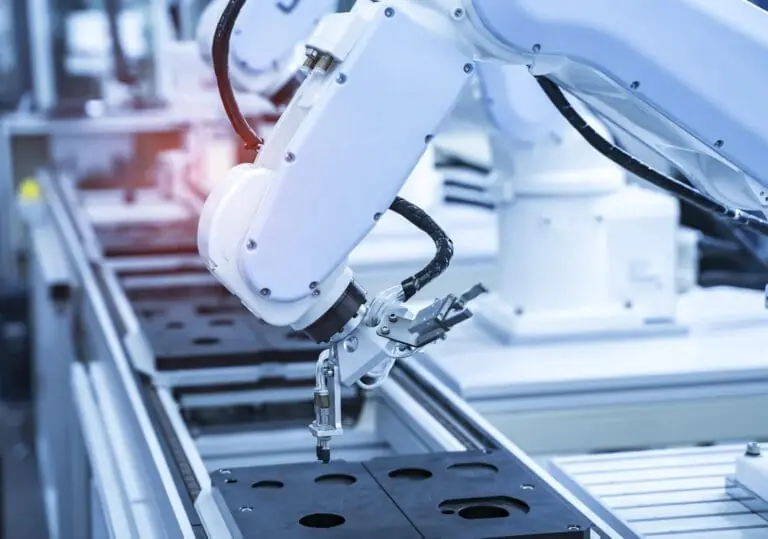
For example, in a plastics manufacturing facility, three operators were assigned to remove molded parts, inspect them, and organize them into containers. After installing a robotic extraction system, two employees were reassigned to quality control and advanced packaging, while one manual position was eliminated entirely. Within less than a year, the company achieved significant labor cost savings while simultaneously reducing human errors.
Inconsistent Quality Comes at a Price
One of the greatest differences between manual and automated production is repeatability.
Machines perform the same operation thousands of times with consistent precision. People—even highly skilled operators—cannot.
Fatigue, distractions, workload, and natural human variation all affect performance. Sometimes this results in minor deviations; other times defects are only discovered late in production—or worse, after the product has already reached the customer.
The cost extends well beyond wasted raw materials.
It includes rework, production downtime, customer complaints, product returns, warranty claims, and damage to the company’s reputation.
Automation systems—especially those integrated with intelligent vision inspection and quality control technologies—dramatically reduce these risks while creating much more stable production processes.
For example, an electronics assembly manufacturer relied on manual quality inspections, causing defective products to be detected only during final packaging. After implementing an automated camera-based inspection system at the beginning of the production line, the final defect rate dropped by nearly 60%.
The company reduced repair costs, minimized customer returns, and strengthened customer confidence.
Small Production Interruptions Create Major Financial Losses
Not every production loss comes from complete downtime.
Short interruptions—a minor malfunction, missing components, assembly delays, or slow transfers between workstations—often go unnoticed individually. Collectively, however, they can represent substantial lost production capacity over months and years.
Manual production systems involve more handoffs between people and processes, creating additional opportunities for delays and errors.
Well-designed automation does more than increase speed.
It reduces friction throughout the manufacturing process by minimizing manual transfers, coordination, and process interruptions.
For example, a food manufacturing company relied on several manual packaging stations where employees transferred products between processing stages. Minor delays regularly created bottlenecks throughout the line.
After connecting the stations with an automated conveyor system, production interruptions fell dramatically and line throughput increased by approximately 25%—without replacing the primary production equipment.
Underutilized Equipment and Factory Space
Many manufacturers invest in advanced machinery but never fully utilize its capabilities.
Without automation, downstream processes often cannot supply material quickly enough, leaving expensive equipment operating below capacity.
As a result, companies invest heavily in machinery and infrastructure while achieving only a fraction of their potential output.
Manual processes also consume valuable floor space through temporary storage, excessive material handling, and intermediate work areas.
Automation streamlines production flow, reduces internal logistics, and frees valuable manufacturing space.
For example, a CNC machining facility found that its machines were operating only about 60% of the available production time because raw materials were not delivered consistently.
After implementing an automated material feeding system and synchronizing workflow, machine utilization increased to nearly 85%—without purchasing additional equipment.
Energy Consumption: The Hidden Operational Cost
One of the least obvious—but highly significant—connections is the relationship between automation and energy efficiency.
When production processes are inconsistent, supporting systems such as compressed air, cooling, electrical infrastructure, and internal logistics often operate inefficiently.
Compressors cycle unnecessarily, cooling systems work harder, and energy consumption increases across the entire facility.
Automation creates predictable, stable production conditions, allowing supporting systems to operate more efficiently.
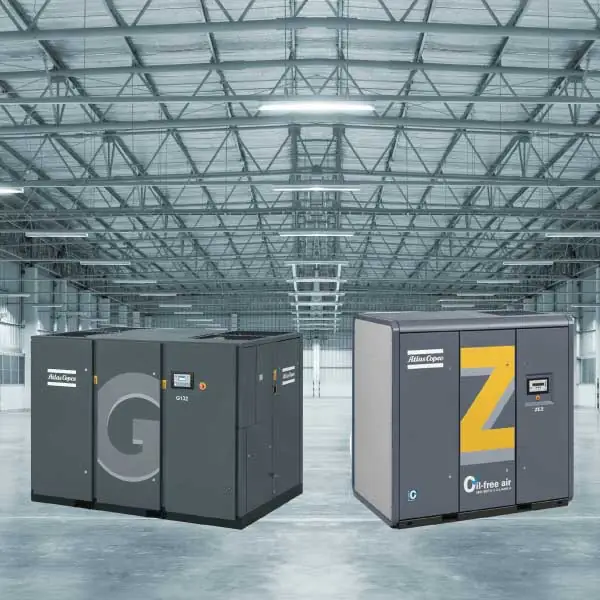
In one manufacturing facility, inconsistent production caused the compressed air system to run at high load for extended periods to compensate for fluctuating demand.
After stabilizing production through packaging-line automation, air consumption became significantly more consistent, enabling the compressors to operate more efficiently.
The result was approximately a 15% reduction in electricity consumption for the compressed air system.
So Why Isn’t Every Factory Fully Automated?
If the hidden costs are so significant, why haven’t all manufacturers embraced automation?
The answer is simple.
Many organizations are not asking, “How much could we save?”
Instead, they are asking, “How do we keep operating with the resources we already have?”
This is where the largest gap exists—not between manual and automated production, but between current performance and unrealized potential.
Conclusion
The true cost of manufacturing often lies in what cannot be easily measured.
Choosing not to automate affects a facility every single day—through lost time, labor inefficiencies, inconsistent quality, production interruptions, excessive energy consumption, and underutilized resources.
These costs rarely appear as a single line in a profit-and-loss statement, yet they accumulate continuously wherever a process could be faster, more stable, more accurate, and more efficient.
In many cases, the real challenge is not deciding whether to invest in automation.
It is recognizing how much the business is already paying by postponing it.
Automation is not merely a future investment—it is often the fastest way to stop an ongoing financial loss that may already be occurring today.