In recent decades, the manufacturing world has undergone a transformation that is not only technological but also profoundly conceptual. The integration of industrial automation and robotics has shifted from a luxury to a strategic necessity, redefining the boundaries of efficiency, safety, and competitiveness in the global market.
This article reviews the evolution of the field, the symbiotic relationship between different systems, and the added value they bring to a wide range of industries—from food and pharmaceuticals to electronics and wastewater treatment.
Sustainability and Energy Efficiency: A Growing Priority
One of the most critical aspects gaining increasing attention in recent years is sustainability and energy efficiency. Advanced automation systems do not only improve productivity—they also enable precise control over resource consumption such as electricity, water, and compressed air.
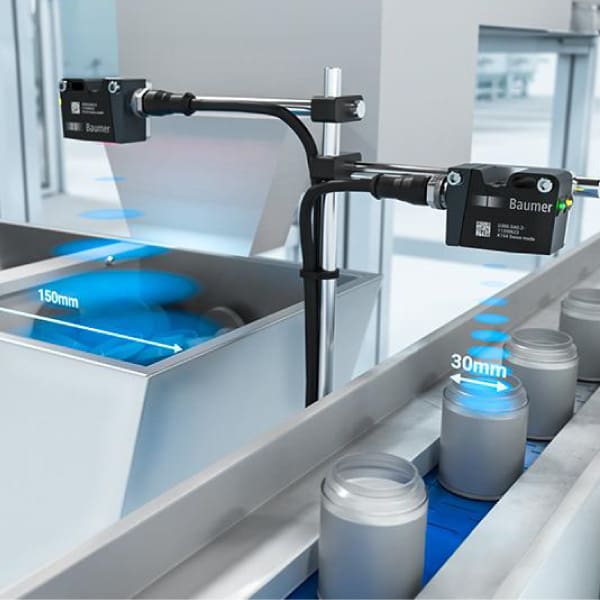
Through smart sensors and data analytics algorithms, waste can be detected in real time, loads can be balanced, and processes can be optimized to operate at peak efficiency. For energy-intensive industries, this results not only in significant cost savings but also in compliance with stricter environmental standards and an improved corporate image as a responsible, green organization.
Digital Integration: The Connected Factory
Another rapidly growing trend is the deep integration between automation systems and enterprise digital platforms such as ERP and MES systems.
This integration creates a continuous data flow—from order intake, through production, all the way to delivery. The result is full transparency, high traceability, and dramatically improved managerial decision-making.
Production managers can identify bottlenecks, optimize scheduling, and respond quickly to changing market demands. In this way, automation becomes not just an operational tool, but a strategic asset connecting the shop floor with executive management and delivering a clear competitive advantage.
The Evolution of Manufacturing: From Mechanical Lines to Smart Factories
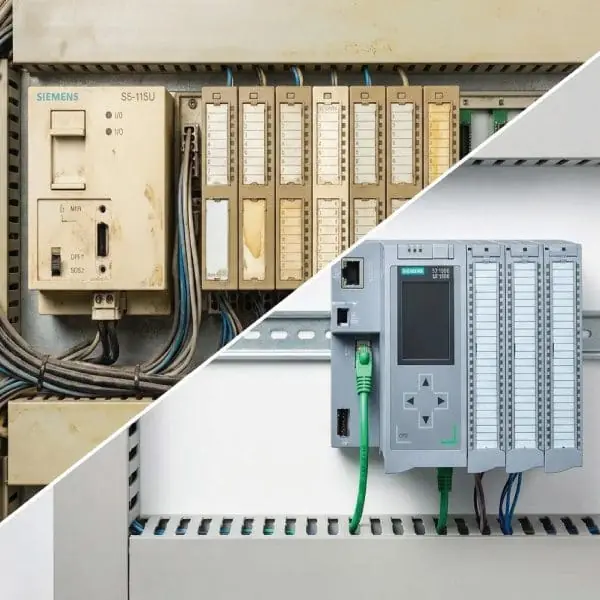
The roots of automation trace back to early 20th-century mechanized production lines. However, the real breakthrough came with the development of Programmable Logic Controllers (PLCs).
- Hard vs. flexible automation: PLCs enabled control logic changes without physical modifications to infrastructure, marking the beginning of flexible automation.
- The data revolution: In the 21st century, IoT, AI, and machine learning transformed isolated machines into interconnected ecosystems.
- Data-driven decision-making: Today, processes rely on real-time analytics, enabling continuous optimization and predictive fault prevention.
The Heart of Automation: Types of Industrial Robots
Within automated systems, robotics serves as the execution arm. The field can be divided into two main categories:
1. Traditional Industrial Robots
These are the “workhorses” of heavy industry, typically operating inside safety cages.
- Applications: welding, painting, palletizing, and heavy material handling
- Advantages: extremely high speed, micron-level precision, and 24/7 operation in harsh environments
2. Collaborative Robots (Cobots)
One of the most significant innovations of recent years—cobots are designed to work alongside humans without physical barriers.
- Safety: equipped with advanced force and touch sensors that stop operation upon human contact
- Hybrid productivity: combining machine precision with human decision-making capabilities
Comparison: Industrial Robots vs. Cobots
| Feature | Traditional Industrial Robot | Collaborative Robot (Cobot) |
| Working environment | Isolated (safety cage) | Open, alongside humans |
| Speed & precision | Very high | Moderate (safety-optimized) |
| Programming | Complex, requires expertise | Intuitive, often teach-by-hand |
| Flexibility | Low (fixed task) | High (easily redeployed) |
| Implementation cost | High (including infrastructure) | Moderate to low |
The Added Value: Why Invest in Automation and Robotics?
A. Operational Efficiency and Cost Savings
Automated systems perform tasks faster and more accurately than humans.
- Reduced scrap rates: higher precision improves product quality and reduces rejects
- ROI: despite initial investment, savings in labor, materials, and downtime lead to relatively fast return on investment
B. Worker Safety and Wellbeing
Automation removes workers from hazardous environments.
- Handling toxic materials
- Extreme temperatures
- Physically demanding tasks (reducing back and shoulder injuries)
C. Business Continuity in Crisis Conditions
During disruptions such as wars or pandemics, the ability to operate with minimal human presence is critical. Smart automation reduces dependency on labor and ensures continuity even under uncertainty.
Success Stories: Automation and Robotics in Action
Electronics Industry
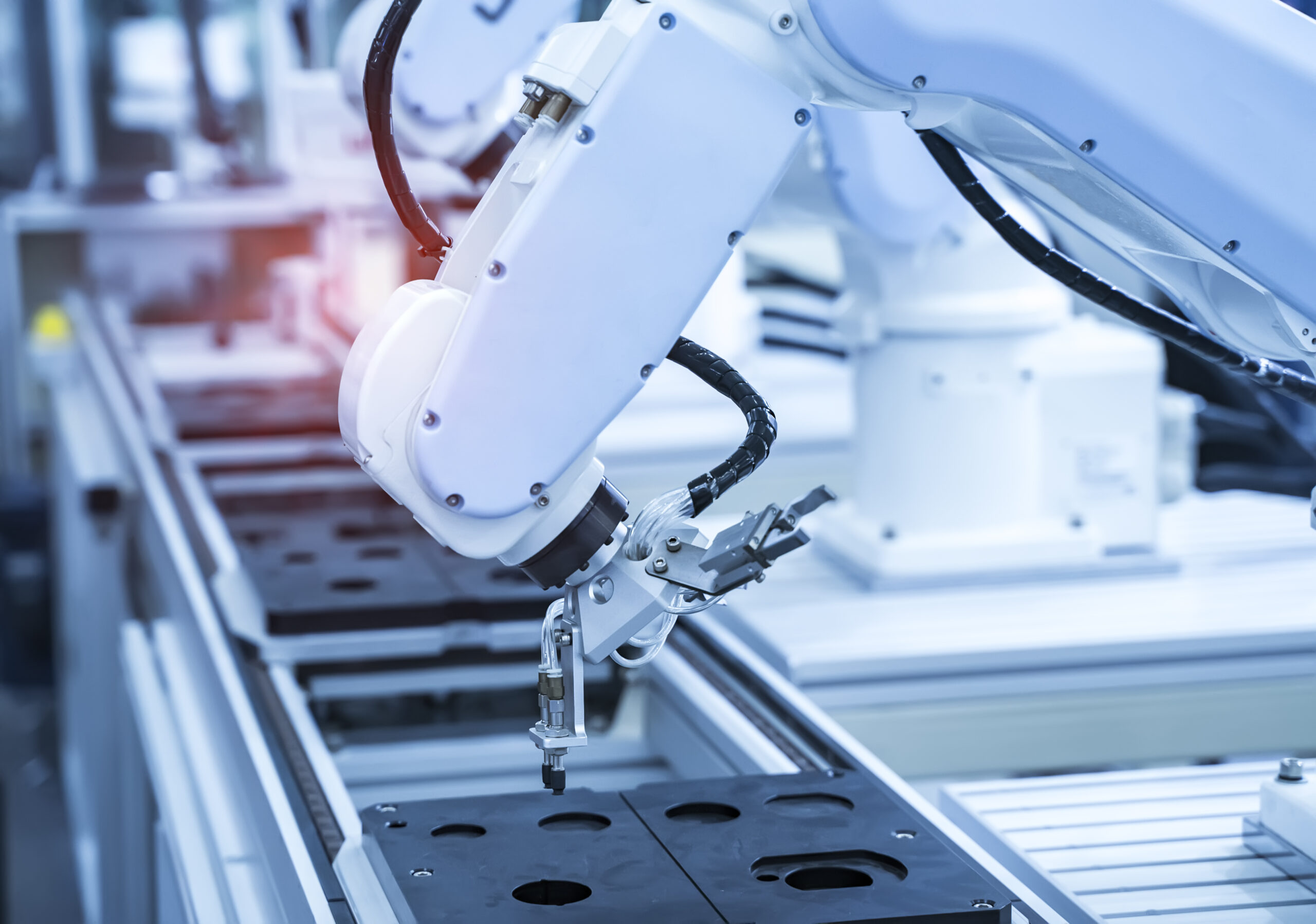
High-speed Pick & Place robots increased production output by 40% while nearly eliminating assembly errors in micro-circuit boards.
Success example: PCB quality inspection system in collaboration with WiseTEC Solutions
https://ayeruham.com/%d7%9e%d7%a2%d7%a8%d7%9b%d7%aa-%d7%91%d7%93%d7%99%d7%a7%d7%aa-%d7%90%d7%99%d7%9b%d7%95%d7%aa-%d7%a9%d7%9c-%d7%9e%d7%a2%d7%92%d7%9c%d7%99%d7%9d-%d7%9e%d7%95%d7%93%d7%a4%d7%a1%d7%99%d7%9d/
Food Industry
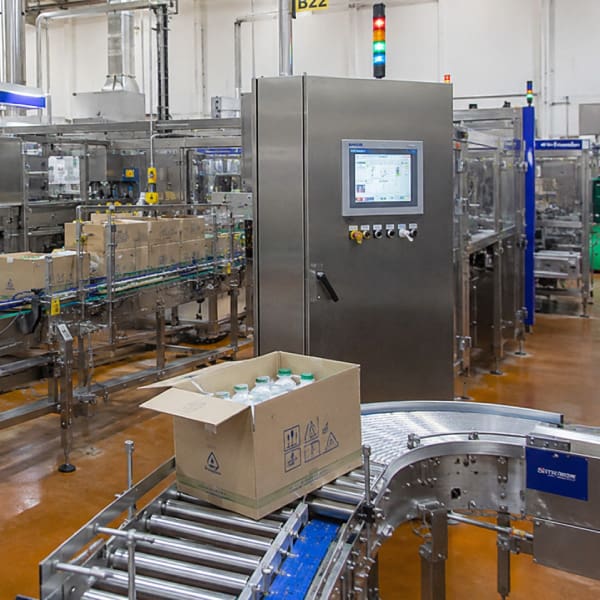
An automated palletizing system in a dairy plant replaced manual labor, reduced injuries, and shortened cycle times by 30%.
Success example: Robotic palletizing system for WiseTEC Solutions
https://ayeruham.com/%d7%9e%d7%a2%d7%a8%d7%9b%d7%aa-%d7%a8%d7%95%d7%91%d7%95%d7%98%d7%99%d7%aa-%d7%9c-palletising-%d7%9e%d7%a9%d7%98%d7%95%d7%97/
Wastewater Treatment Facilities
Advanced PLC and sensor systems enabled continuous monitoring of water quality and automatic chemical balancing, preventing contamination and improving energy efficiency.
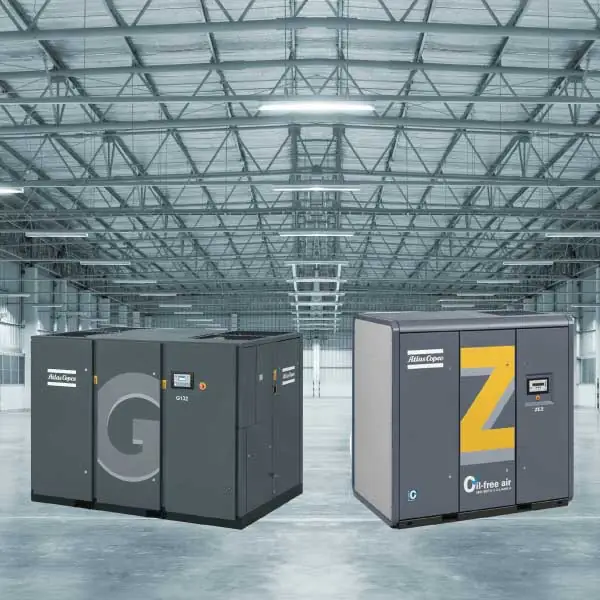
Compressed air systems also play a critical role in wastewater infrastructure.
Success example: Mobile compressor room for Shafdan
https://ayeruham.com/%d7%97%d7%93%d7%a8-%d7%9e%d7%93%d7%97%d7%a1%d7%99%d7%9d-%d7%a0%d7%99%d7%99%d7%93-%d7%9c%d7%a9%d7%a4%d7%93%d7%9f/
The Future: Predictive Maintenance and Autonomous Manufacturing
The next stage in industrial automation is a shift from reactive to proactive systems—led by Predictive Maintenance.
Instead of waiting for breakdowns, modern systems continuously collect data from sensors installed on motors, bearings, compressors, fans, and drives. Parameters such as vibration, temperature, current, pressure, and acoustic signals are analyzed using AI and machine learning algorithms to detect anomalies before failures occur.
This enables:
- Optimized maintenance scheduling
- Reduced downtime
- Extended equipment lifespan
- Lower maintenance costs
Predictive maintenance integrates seamlessly with CMMS systems, enabling data-driven decisions across entire production networks.
Toward Autonomous Manufacturing
Future factories will operate as intelligent, adaptive systems capable of learning and optimizing in real time.
- Smart robots and industrial AI
- Machine vision systems
- IoT-connected production lines
Examples include:
- Automatic adjustment of production parameters based on raw material quality
- Real-time defect detection and correction
- Dynamic load balancing between workstations
- AI-driven production scheduling based on demand and supply
Digital Twins: Bridging Physical and Digital Worlds
Digital Twins enable virtual simulation of entire production lines or factories. This allows companies to:
- Test changes before implementation
- Identify potential issues in advance
- Optimize processes without production risk
Frequently Asked Questions (FAQ)
Is automation only suitable for large factories?
No. While automation was once limited to large enterprises, today modular systems and cobots allow SMEs to implement automation gradually and cost-effectively.
What is the ROI timeframe?
Typically between 18–36 months, and in some cases less than a year depending on scope and application.
What are the main challenges?
- Proper needs definition
- Technology selection
- System integration
- Workforce training
- Organizational resistance to change
Does automation require heavy maintenance?
Modern systems are highly reliable and require relatively low maintenance, though periodic servicing and updates are still necessary.
How do you choose the right solution?
Based on process type, accuracy requirements, production speed, environmental conditions, flexibility needs, and budget.
Does automation improve product quality?
Yes. It ensures consistency, reduces human error, and enables real-time quality control systems.
How does automation affect safety?
It significantly improves safety by transferring hazardous tasks to machines and reducing human exposure to dangerous environments.
Conclusion
The integration of automation and robotics is the driving force of modern industry and represents a true symbiotic revolution.
Organizations that adopt these technologies will not only improve their bottom line but also create safer, higher-quality, and more innovative work environments for their employees.