It usually starts almost unnoticed.
A valve begins making a noise it never made before. A machine that has been running for months without a problem starts stopping occasionally-often right in the middle of a shift.
At first, the fault is simply reset and production continues. The next time, a small component is replaced. Maybe a seal, a valve, or a tube.
And then comes the shutdown.
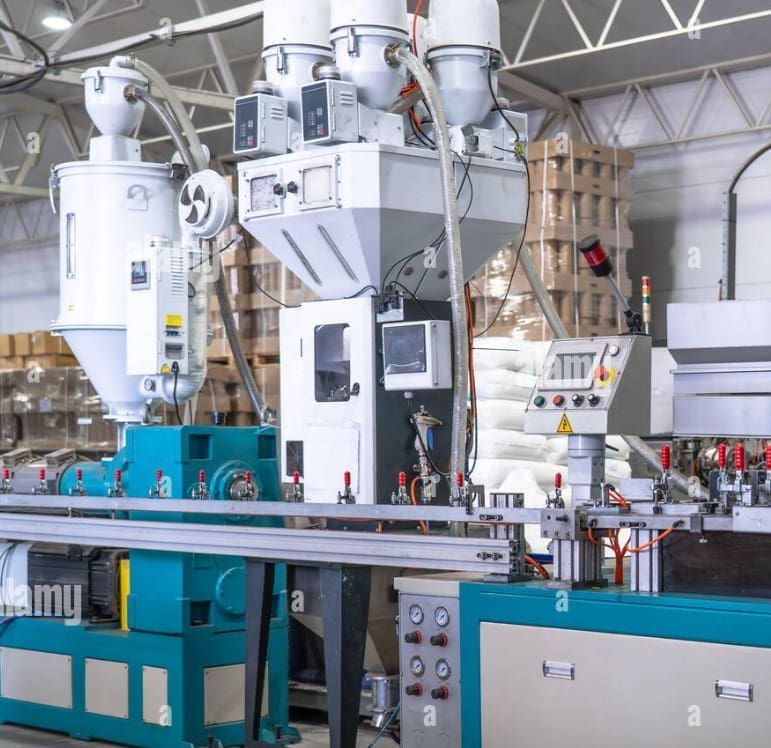
Suddenly, what seemed like a minor issue turns into a machine that is standing still. A production line stops moving, and employees are left waiting for the system to return to operation.
Beyond the cost of replacement parts and maintenance labor, there is a much higher price: lost production.
This can happen surprisingly often in pneumatic systems. Pneumatics are generally considered reliable, relatively simple to maintain, and suitable for a vast range of industrial applications.
However, even a high-quality system that has been properly designed and professionally installed can wear out earlier than expected when operating conditions are not right.
The problem is that some of the factors contributing to premature wear are not always visible:
- Compressed air may appear clean-but it isn’t necessarily. After all, it is invisible.
- Air moving through a pneumatic network can carry moisture, dirt particles, oil, pipe residue, and other contaminants.
- Pressure that is supposed to remain stable can fluctuate throughout the day.
- A component that appears suitable on paper may prove inadequate when system requirements change.
And so, without any single major failure, wear and tear gradually accumulates.
In other words, sometimes the real enemy of a pneumatic system is not a defective component, but the conditions in which it operates.
What Causes Pneumatic Systems to Wear Out Prematurely?
There are many possible causes, but four are particularly common and repeatedly appear in the field:
- Poor air quality
- Incorrect pressure or airflow for the application
- Improper lubrication
- Incorrect component selection
The good news is that in many cases, the problem can be identified before it turns into an unplanned shutdown.
1. The Air Isn’t as Clean as It Seems
One of the first things to check in a pneumatic system is air quality.
Compressed air entering the system can contain moisture and particles that may damage components over time. When the air is not properly treated, these contaminants continue downstream and reach critical system components.
During the air-compression process, conditions are created in which water can condense. If it is not properly separated and removed, it can enter the pneumatic system. At the same time, dirt and dust particles can accumulate and affect the performance of sensitive components.
At first, there may be no obvious symptoms. The machine continues to operate. The cylinder continues to perform its movement.
But over time, dirt and moisture can cause seal wear, interfere with proper component movement, and lead to valve malfunctions.
This is why compressed-air treatment is not simply a “nice-to-have” addition to a pneumatic system. It is part of the infrastructure the system depends on.
Proper filters, water separators, effective drainage, and a service unit that matches the system requirements can make a significant difference.
Just as important is selecting the appropriate filtration level for the application. Not every system requires the same level of filtration, and a filter should not be selected solely based on pipe diameter or on what was used in an older system.
Filter maintenance is also essential. A filter that remains in the system for years without inspection can eventually become a problem itself. Dirt accumulation can increase pressure drop and reduce the amount of air reaching the component.
2. The Pressure Is There – But Is It Enough?
“There is pressure in the system” is not necessarily a sufficient answer.
One of the most common issues in pneumatic systems occurs when the pressure actually reaching a component does not match the requirements of the application.
The pressure at the air-generation point may appear perfectly normal, while the situation at the machine itself is completely different.
Pressure drops along the piping, clogged filters, incorrectly sized tubing, or higher-than-expected air consumption can all affect system performance.
The result may be slower movement, insufficient force, unstable operation, or a machine that performs well at certain times but struggles when several consumers operate simultaneously.
This is exactly where a chain of partial solutions can begin. The machine may return to operation, but the underlying problem is still there.
Therefore, when a pneumatic system begins behaving inconsistently, it is worth examining not only the component where the fault appeared, but also how the air gets to that component.
Is the piping diameter appropriate?
Is there a significant pressure drop?
Is the filter suitable for the required flow rate?
Are additional consumers operating at the same time?
Does the actual operating pressure meet the requirements of the end devices?
These are relatively simple questions, but they can prevent unnecessary component replacement.
3. Lubrication – More Oil Doesn’t Necessarily Mean Better Performance
Lubrication is another topic that sounds simple but actually requires a fair amount of precision.
In the past, lubrication was more commonly used as an integral part of many pneumatic systems. Today, depending on the type of components and the manufacturer’s requirements, many systems and components are designed to operate without additional lubrication.
This is exactly where mistakes can occur.
If a system is designed to operate without lubrication, adding oil “just to be safe” is not necessarily beneficial.
On the other hand, if a particular component does require lubrication, it is important to ensure that it receives the correct type and amount.
Too much oil is not a solution to wear, just as too little oil is not a solution either.
Improper lubrication can affect seals and other components, cause contaminants to accumulate, trigger unwanted chemical reactions, and create additional problems further downstream.
If a lubrication system is used, it must also be properly adjusted and maintained according to the manufacturer’s requirements.
So the right question is not simply, “Does the system need lubrication?”
It is: “What do the manufacturer and the application require?”
Before adding oil to an existing system, it is worth checking the component specifications and confirming whether lubrication is actually required. If it is, the correct type and dosage should be determined.
Once again, proper maintenance starts with understanding the system-not with automatically repeating a practice that may have been followed for years without being reevaluated.
4. The Components Simply Aren’t Suitable for the Requirement
Sometimes the component itself is not defective. It simply isn’t adequately suited to the task it is now required to perform.
This can happen when machine requirements change.
A new product enters the production line. Product weight changes. Operating speed increases. An additional workstation is added.
The original system was designed for a specific set of conditions, but production requirements have evolved.
A cylinder that was perfectly suitable three years ago may still be operating today, but now it has to handle a higher load or a much higher duty cycle.
The same can happen with a valve.
Selecting a pneumatic component is not simply a matter of asking whether it “fits” the system.
The required force, movement speed, cycle frequency, airflow, operating pressure, environmental conditions, and physical limitations of the machine all need to be considered.
Choosing a component that is too small-or otherwise incorrectly specified-can force the system to operate too close to its limits.
When that happens, even a small change in operating conditions can turn into a problem.
So when modifying a machine or replacing a component, it is worth stopping for a moment and asking:
What has actually changed since the system was originally designed?
How Can You Prevent a Failure Before It Reaches the Production Floor?
The best way to deal with premature wear is not to wait for a failure.
It sounds obvious, but in plants where the priority is to get a machine back up and running as quickly as possible, maintenance can sometimes become a form of “firefighting.”
Something breaks. It is replaced. The fault is reset. Production continues.
But pneumatic systems often provide warning signs before a failure occurs.
A movement that becomes slower.
A new or unusual noise.
Air consumption that seems higher than usual.
Repeated adjustments.
Water accumulating in the air-treatment unit.
A drop in pressure during operation.
A component that wears out or overheats more frequently than expected.
Any one of these signs can be a reason to stop and investigate.
One of the first areas worth examining is the FRL (Filter-Regulator-Lubricator) unit, which typically provides filtration and pressure regulation, and may also provide lubrication when required by the system.
A properly selected service unit can help prepare the compressed air for the required operating conditions before it reaches the pneumatic components.
But here too, there is no one-size-fits-all solution.
Selection should be based on the actual system requirements: flow rate, pressure, air quality, application type, environmental conditions, and the characteristics of the downstream components.
It is also important to look at the piping-not just the components.
A system designed with undersized piping, excessively long air lines, or suboptimal connections can experience pressure drops and deliver lower performance than originally intended.
Sometimes, the Right Place to Start Is by Looking at the Entire System
When a machine stops, it is natural to look for the component that failed.
But if the same component keeps failing, perhaps the question needs to change.
Instead of asking:
“Why did the valve fail?”
Ask:
“What is causing the valve to operate under conditions that shorten its service life?”
Instead of:
“Why is the cylinder losing performance?”
Ask:
“Is it receiving the pressure, airflow, and air quality it actually needs?”
And instead of replacing yet another component, check whether there is a broader issue affecting the system.
A professional assessment of a pneumatic system can include examining air quality, pressure, flow rate, service units, piping, valves, and cylinders, as well as verifying that the components are properly matched to the actual operating requirements.
In some cases, the solution may be relatively simple: replacing a filter, improving drainage, adjusting a regulator, changing pipe diameter, or correctly configuring a component.
In other cases, the assessment may reveal a need to redesign or upgrade part of the system.
The value lies not only in fixing the current failure, but in understanding what caused it in the first place.
Failures Begin Long Before the Machine Stops
The production floor does not always give us enough time to investigate a failure properly.
But a pneumatic system can often provide clues.
If your pneumatic system is experiencing recurring failures, declining performance, or premature component wear, it may be time to look at the system as a whole-not just the component that failed.
The Automation Yeruham team can assist with system assessment, component selection, and identifying the right solution for your specific system and application requirements.