Do You Know What Machine Vision Really Is?
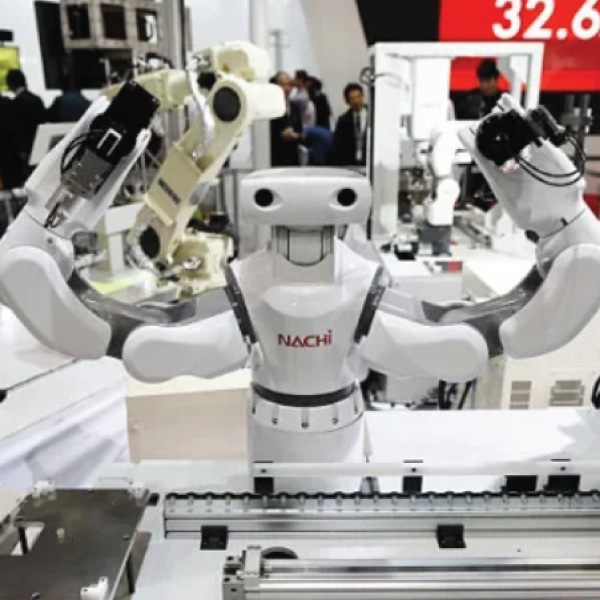
Over the past decade, industrial automation has evolved from a collection of separate technologies—robots, pneumatics, sensors and control systems—into one intelligent, unified ecosystem. At its core lies the tight integration of advanced robotics, artificial intelligence (AI), and machine vision capabilities. This convergence is transforming production lines worldwide, enabling factories to shift from mechanical processes to smart, autonomous lines that can “see,” analyze and react in real time.
The rapid development of machine learning algorithms, combined with increasing precision in industrial cameras and sensors, has sparked a true revolution. Manufacturing systems can now recognize parts in space, make independent decisions, adjust robotic motion, and perform continuous quality control. Tasks that once required complex feeders, manual calibration and strict order on the line can today be handled with far greater flexibility and with minimal human intervention.
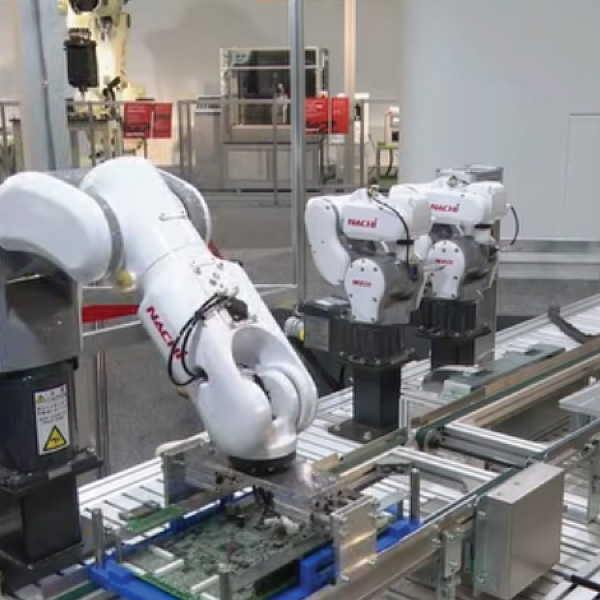
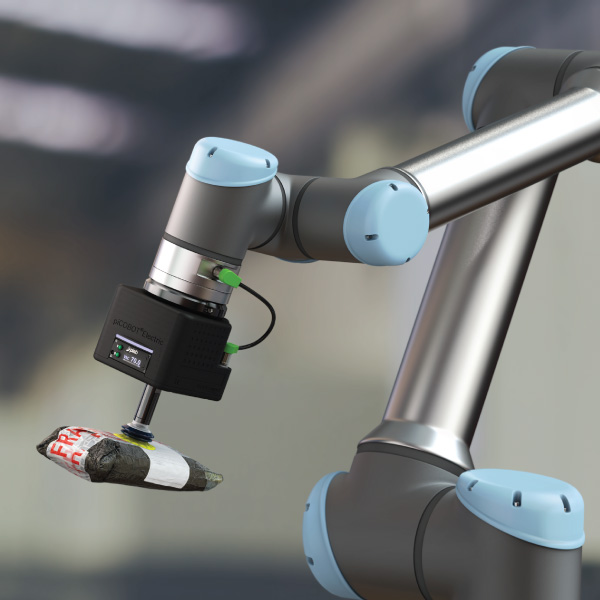
Where Is Machine Vision Used Today?
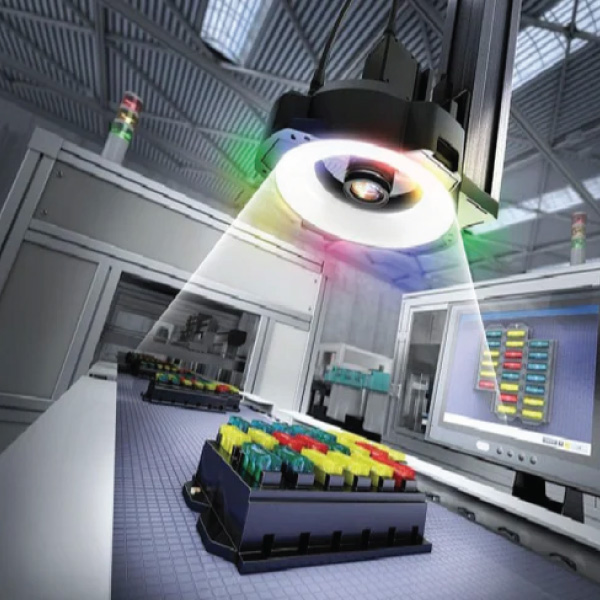
One of the most prominent applications is automated inspection and sorting.
A smart camera equipped with image-recognition algorithms can not only detect microscopic defects, but also decide whether a part should continue down the production line, be corrected, or be rejected. When combined with robots equipped with pneumatic or vacuum grippers, sorting becomes fast, consistent and free from human fatigue or performance variability.
Pick & Place applications are also undergoing dramatic change. In the past, these systems required parts to be arranged in precise, predefined positions. Today, thanks to machine vision and AI, true bin picking is possible—identifying and picking parts from a random bin even when they are rotated, flipped or overlapping. The algorithm maps each item and instantly calculates the optimal gripping angle for the robot, making this one of the key performance boosters in high-speed production environments.
In precision assembly, the integration of force control with machine vision created another significant leap. When a camera detects a tiny misalignment between components, the robot can correct its position in real time and perform delicate insertions, fastening, gluing or threading of miniature parts. For industries such as electronics, medical devices and precision plastics, these capabilities dramatically improve quality, speed and operational consistency.
Packaging and logistics are also being transformed. Cameras now provide detailed information about product orientation, shape and condition, allowing robots to adjust their grip—vacuum, mechanical, or hybrid—on the fly. As a result, packaging lines run faster, with greater uniformity, and without the need for heavy, complex mechanical fixtures.
Why Integrate AI into Production Lines?
Adopting AI is not driven solely by technological innovation, but by real market needs:
a shortage of skilled labor, stricter quality requirements, demand for continuous operation and the need for improved energy efficiency. Factories in Israel and around the world are seeking solutions that help them stay competitive, produce a wider range of products quickly, and adapt their lines without major mechanical investments.
In practice, these advanced technologies integrate smoothly into production workflows. They expand manufacturing capabilities and improve product quality, while enabling operators to focus on monitoring, process optimization and maintenance. Employee roles shift from manual operation to decision-making and continuous improvement.
From Theory to Practice: Real Technological Examples
Many factories already deploy combinations of:
- Industrial robots for sorting, assembly, gluing and packaging
- Pneumatic and vacuum systems for actuation, lifting and precise gripping
- Linear units and aluminum profiles for modular production stations
- Smart sensors monitoring pressure, position, temperature and motion in real time
- Vision cameras connected to PLC controllers or AI-enabled industrial PCs
Together, these elements create fast, flexible and highly accurate production lines—systems that can be adapted instantly to changing needs.
Where Does Yeruham Automation Fit In?
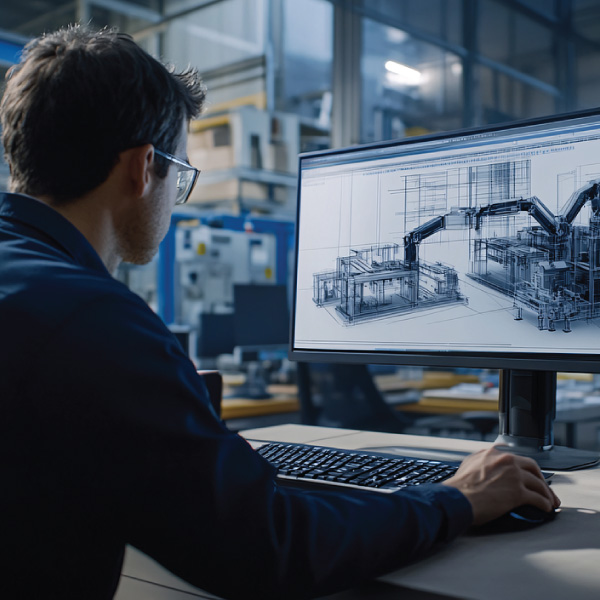
As an established leader in automation, robotics and pneumatics, Yeruham Automation provides a wide range of solutions that help factories implement the powerful combination of robotics, AI and machine vision. From pneumatic systems and custom grippers, to linear units, industrial robots and professional engineering consultation—Yeruham Automation supports manufacturers in upgrading their production lines to the next generation of smart automation.