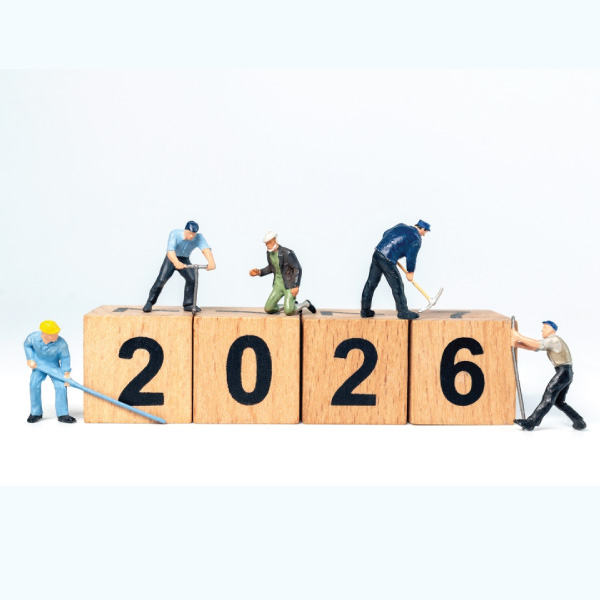
Over the past decade, industrial automation has been viewed primarily as an efficiency tool: fewer workers, higher output, fewer errors. According to all forecasts, 2026 marks a deeper shift. Automation is no longer just about cost reduction—it is about factories’ ability to survive, grow, and remain competitive in a world of labor shortages, increasing regulation, and constant pressure to innovate.
In this article, we review the key trends shaping industrial automation from a practical, application-driven perspective, with a clear focus on the shop floor itself.
Automation as a Response to Labor Shortages – Not a Replacement for People
The shortage of skilled technical workers is no longer a future concern—it is a daily reality in many factories. In 2026, automation is not perceived as replacing workers, but as replacing tasks: physically demanding work, repetitive processes, and human bottlenecks.
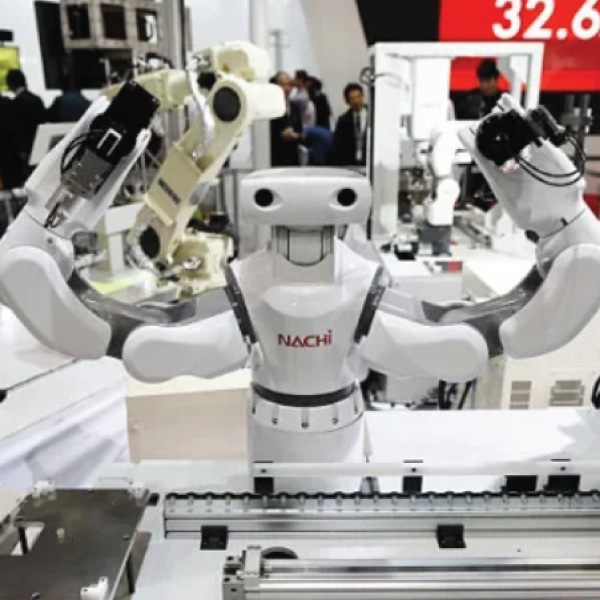
Collaborative robots (cobots), smart pick & place stations, and automated material-handling systems are now being adopted by small and medium-sized factories, not just large production lines. The goal is clear: enable existing employees to focus on more complex, higher-value tasks.
Automotive and electronics manufacturers such as BMW and Foxconn are integrating cobots into semi-manual assembly lines, particularly at stations with high physical strain or high employee turnover. Cobots handle repetitive actions, while workers focus on inspection, adjustment, and quality.
Automation in 2026 no longer asks only “How much does it save?”—but “Who will be running this line in two years?”
Artificial Intelligence Moves from the Cloud to the Shop Floor
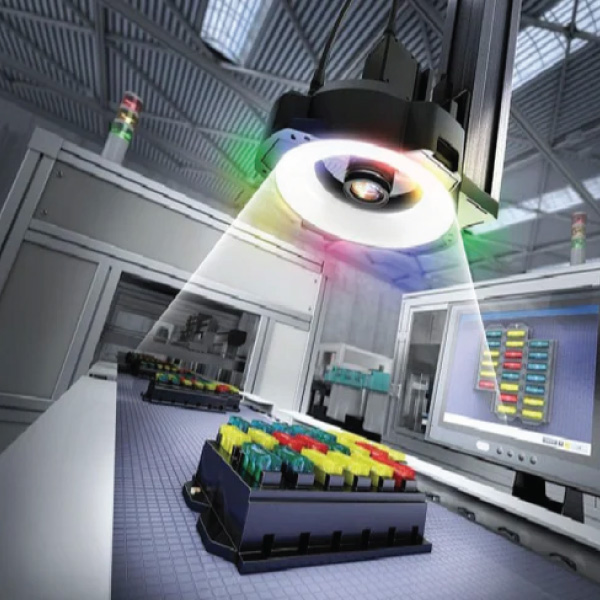
If AI was once an abstract concept or an experimental project, in 2026 it becomes a daily operational tool. Today, artificial intelligence is embedded directly into controllers, cameras, and control systems, delivering immediate value:
- Real-time anomaly and fault detection
- Machine vision–based quality control
- Predictive maintenance
The real breakthrough is simplicity. There is no need for data science teams or long-term pilot projects. AI is becoming accessible, purpose-driven, and tailored for real industrial use.
Companies such as Siemens and Bosch are implementing AI directly on production lines to detect microscopic defects using local cameras and edge-based algorithms. This shift enables immediate line stoppage and error reduction—without reliance on cloud connectivity or complex data analysis.
Clean, Efficient & Sustainable Are No Longer Optional
In industries such as food, pharmaceuticals, electronics, and high-tech, the demand for clean and energy-efficient solutions has become the standard.
Oil-free compressed air systems, energy-saving solutions, and smart consumption monitoring are no longer just environmental considerations—they are regulatory and business requirements. Customers, regulators, and investors expect clean, measurable, and sustainable processes.
Automation in 2026 is measured not only by speed and precision, but also by its energy footprint. Global food and pharmaceutical companies such as Nestlé and Pfizer have transitioned in recent years to oil-free compressors and intelligent energy management systems to meet strict quality standards and reduce long-term energy costs.
Fewer Mega Projects – More Modular Solutions
Manufacturers today are seeking flexibility. Instead of large, one-time investments in complex automation projects, more organizations prefer modular solutions that can be implemented gradually, upgraded, and adapted to changing needs.
This approach enables:
- Faster implementation times
- Lower risk
- Scalability for future growth
- Reduced upfront investment costs
The Integrator as a Partner, Not Just a Supplier
One of the most notable trends toward 2026 is a shift in customer expectations. Clients are no longer looking only for components or systems—they are looking for a partner who understands processes, identifies bottlenecks, and delivers a complete solution.
The modern integrator must combine deep engineering expertise, hands-on shop floor understanding, and proven experience across diverse projects. The true value lies not in the equipment itself, but in its precise alignment with customer needs.
Factories working with leading integrators report shorter project timelines and improved performance, thanks to having a single responsible partner for system definition, equipment selection, and implementation—rather than managing multiple separate suppliers.
More Data – Less Complexity
Despite the growing number of sensors and data points, 2026 marks a clear trend toward simplification: intuitive dashboards, focused data, and actionable insights that enable fast decision-making.
The goal is no longer to collect more data, but to provide real tools for production, maintenance, and engineering managers. Industrial companies such as Tesla use clear, operational dashboards that present critical real-time metrics—output, faults, and quality—without unnecessary information overload.
In Conclusion: What Should Factories Do Today?
The automation of 2026 is not a futuristic vision—it is already here. Factories that choose to view automation as a strategic tool, rather than merely an operational one, will benefit from greater flexibility, stability, and a significant competitive advantage.
The first step is not necessarily purchasing a new system, but conducting a smart process assessment:
Where is the real pain point?
Where is the bottleneck?
And how can automation serve the organization—today and in the future?
Yeruham Automation provides comprehensive, customized industrial solutions, integrating advanced technologies tailored to each customer’s unique needs.
This article is based on hands-on field experience, collaboration with manufacturers across multiple industries, and insights gained from integrated industrial automation projects throughout Israel.