How Modular Automation Components Are Transforming the Modern Factory
In the past, an efficient production line was one that never stopped. The same product, running at the same speed and following the same sequence for hours, days, and sometimes even weeks. The longer machines operated without requiring changes, the easier it was to justify the investment and achieve a lower cost per unit.
But the modern factory no longer operates exclusively this way.
Today, customers may order small batches of a specific product, introduce a new product to the market, or request products with varying dimensions and specifications. A factory may need to produce 500 units of one model, 200 of another, sometimes within the same shift, and then run an entirely new product by the end of the week. In this environment, a production line perfectly optimized for one product can quickly become a limitation when it is time to switch to the next.
High Mix, Low Volume
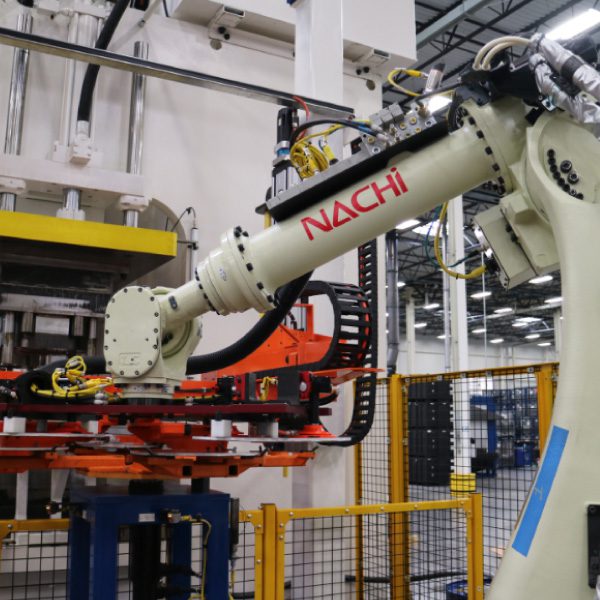
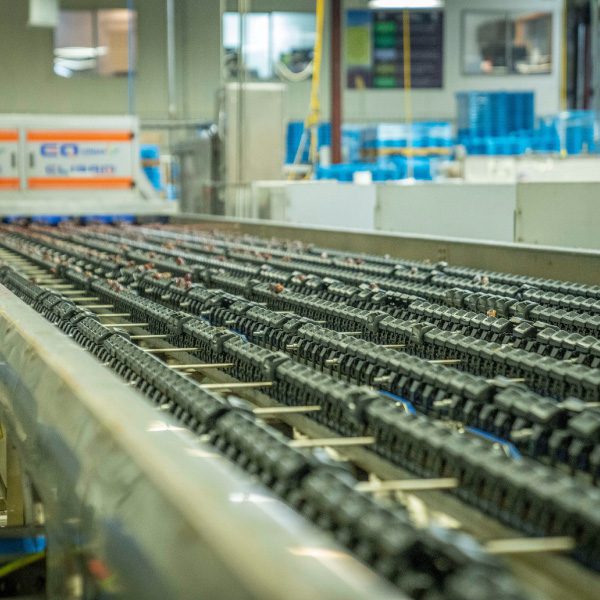
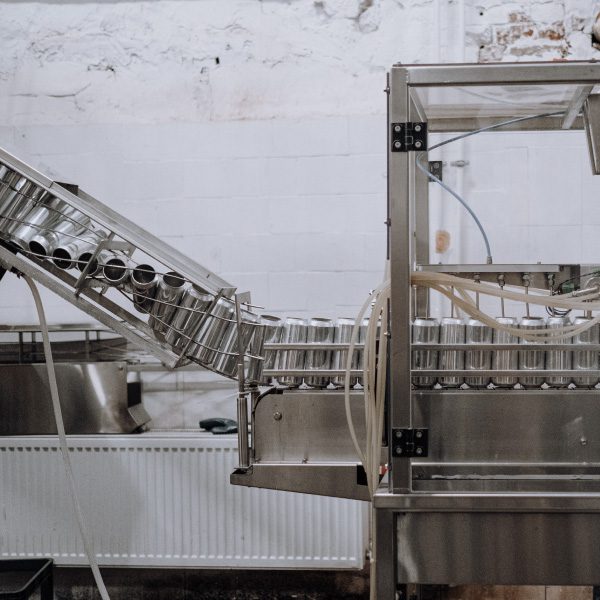
High Mix, Low Volume (HMLV) manufacturing refers to producing a wide variety of products, with relatively small quantities of each.
This trend requires manufacturers to rethink how they integrate automation into their production lines. The question is no longer simply how to produce faster, but how to make the entire production environment adaptable to change.
If the traditional question was, “How many units per hour can this line produce?”, production managers today must also ask: “How long will it take to adapt the line for the next product?”
When Product Changeovers Become Part of the Production Process
Imagine a factory manufacturing assemblies for several customers. On Sunday morning, the production line is running Product A. By midday, it needs to switch to Product B. On Monday, a small order arrives for Product C, which has completely different dimensions. On paper, this is simply a product changeover.
In practice, the transition may involve replacing conveyors, adjusting workstation heights, repositioning sensors, modifying guides, relocating a robot, changing its gripper, and updating the control program.
Each of these tasks may take just a few minutes. Together, however, they can add up to hours of downtime, and sometimes even days of planning, dismantling, reassembly, and fine-tuning.
In low-volume production, time has a significant economic impact. When a production run consists of only a few hundred or a few thousand units, every hour the line is not producing directly affects costs and overall output.
This is why one of the keys to successful High Mix, Low Volume manufacturing is flexible automation: systems designed from the outset to accommodate adjustments without having to start the entire machine-building process from scratch.
Don’t Build a Separate Line for Every Product – Build a System That Adapts
The traditional approach was to build a dedicated machine or production line for a specific product. The machine was precisely engineered, every component was positioned exactly where it needed to be, and the entire system was optimized for maximum performance.
The modular approach starts from a different premise. Instead of asking how to build a line that suits one product, manufacturers ask how to create a production platform that can accommodate multiple products.
In this approach, aluminum profile systems, modular conveyors, material handling components, and robotic solutions become something like an industrial construction kit, allowing the production environment to be reconfigured as needed.
This means that a product change does not necessarily have to become a new engineering project. Modularity allows systems to be designed in advance for future adjustments, so that changes require targeted modifications rather than complete reconstruction.
Aluminum Profiles: The Foundation for Adaptability
In industrial automation, aluminum profiles are used to build a wide range of solutions, from machine frames and enclosures to workstations, material handling structures, safety fencing, and custom-built installations.
In High Mix, Low Volume environments, their greatest advantage is adaptability.
When a production environment is built around a modular structure, components can be repositioned, additional profiles can be integrated, frames can be extended, workstation heights can be adjusted, and existing structures can be adapted to accommodate new products – without the need for extensive cutting, welding, painting, and rebuilding.
Even when modifications require additional work, they are performed on an existing system rather than starting from zero.
Imagine, for example, a production line receiving a new product that is wider than its predecessor. Instead of replacing the entire structure, the solution may simply involve repositioning the guides, adjusting the width, or adding a suitable component.
It may sound like a minor modification, but saving an entire day of work can make a significant difference.
Conveyors Don’t Have to Be Fixed
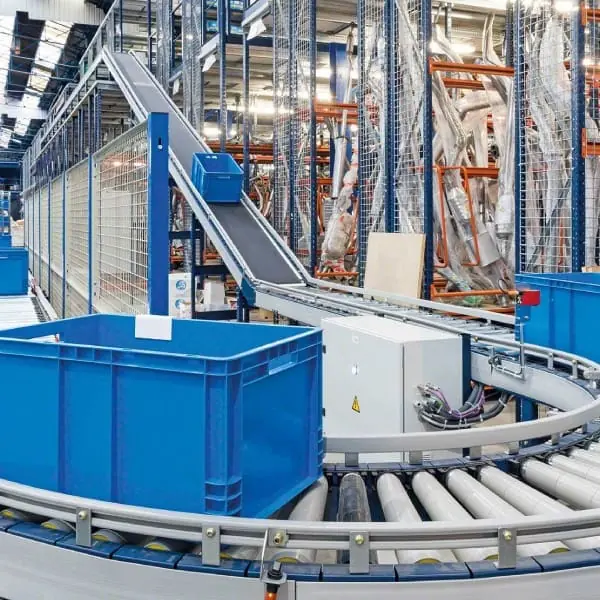
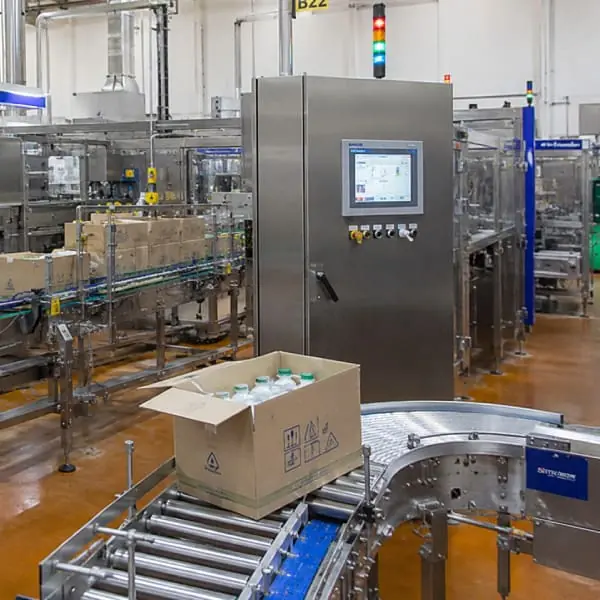
The same principle applies to material handling systems. Modular conveyor systems make it possible to build material flow solutions from individual sections and components that can be adjusted, extended, and reconfigured.
Different conveyor types can be integrated, lengths modified, guides adjusted, and components repositioned to meet the specific requirements of the production process.
The reason is simple: not every product behaves in the same way.
One product may be small and lightweight, while another is wider and heavier. One may require precise positioning at a specific point, while another needs to move quickly to the next station.
A flexible material handling system makes it possible to design the process around the product – rather than forcing the product to fit the conveyor.
And Then There’s the Robot – Which Needs to Adapt, Too
Industrial robots and collaborative robots (cobots) have become an integral part of many manufacturing environments. But even the most advanced robot requires adjustments when it is expected to handle different products.
One of the key components in this context is the gripper, which enables the robot to pick up and hold a product.
When the same production line handles a variety of products, the gripper becomes a critical factor in the overall flexibility of the system. Rather than designing a dedicated robot for a single product, manufacturers can, in suitable applications, design systems with interchangeable grippers or use solutions that allow the robot to handle different product types.
This transforms the robot from a machine designed to perform a single task into a flexible platform capable of carrying out a variety of operations, depending on the product moving through the line.
Flexibility Means Knowing What to Change
There is a common misconception about flexible manufacturing: a flexible factory is not one where everything can be changed at any moment.
True flexibility means identifying exactly what needs to change and designing the system so that only the relevant components require adjustment.
If a product changes, there is no reason to replace an entire conveyor if only the guides need to be modified. There is no need to dismantle an entire structure if a single module can be adjusted.
This is precisely why proper system design is just as important as selecting the right components.
Flexibility That Also Reduces Costs
Flexible manufacturing offers clear engineering advantages, but its economic benefits are just as important.
When evaluating an investment in an automation system, it is essential to look beyond the initial purchase and installation costs and consider the Total Cost of Ownership (TCO) over the system’s entire lifecycle.
A production system designed in advance to accommodate adjustments and changes can reduce the need to invest in entirely new production lines, purchase additional equipment, or carry out complex engineering modifications every time a new product is introduced.
Furthermore, shorter changeover times between production runs mean better utilization of machinery and working hours, increased production capacity, and lower costs associated with waiting times, installations, and adjustments.
The ability to expand an existing system gradually, in line with business growth and changing requirements, also helps manufacturers avoid large upfront investments in equipment that may not be needed in the future.
Ultimately, the savings are not measured solely by component prices or the initial cost of setting up a production line. They are reflected in the total cost over time: less downtime, fewer costly modifications, more efficient resource utilization, and the ability to respond to change without launching a new engineering project every time.
The Israeli Advantage Doesn’t Have to Be About Price
The challenges facing Israeli manufacturers are well known.
When competing against manufacturers in countries with lower production costs, winning every deal on price alone can be difficult, and sometimes impossible. But not every customer is looking for the lowest price.
Many customers prioritize availability, quality, flexibility, small production runs, rapid customization, short delivery times, and the ability to respond quickly to changing requirements.
This is where local manufacturing has a significant advantage.
A factory that can accept a small production order, adapt its manufacturing environment, and deliver a product within a short timeframe offers value that customers cannot always obtain as easily from an overseas manufacturer.
The Bottom Line: The Future Belongs to Production Lines That Know How to Move
In a world where product variety continues to grow and manufacturing becomes increasingly dynamic, the competitive advantage will belong to factories that can adapt their systems quickly and efficiently.
The ability to modify a workstation, reconfigure material handling, replace grippers, or adjust a structural assembly without building an entirely new production line can have a direct impact on downtime, line utilization, and the ability to take on new projects.
Ultimately, flexibility is not an end in itself.
It is a way for manufacturers to keep production running, even as products, customers, and manufacturing requirements change.
In a dynamic world where producing millions of identical units is no longer always the most profitable approach, the modern factory’s competitive advantage does not necessarily lie in its ability to produce more of the same thing – but in its ability to switch efficiently and quickly to producing what comes next.